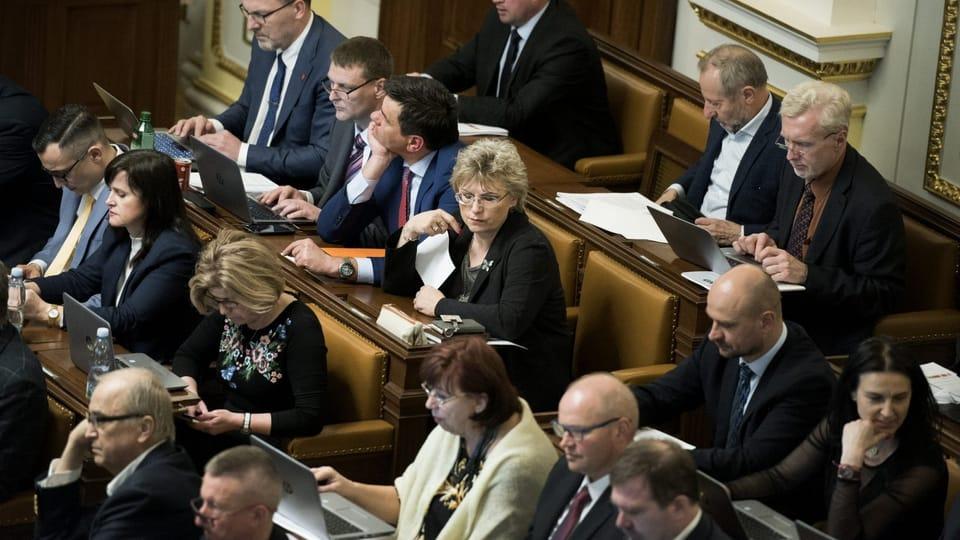
Croatie

Women's caucuses and alliances for sustainable development

A discussion circle on how women's caucuses and alliances can shape national policy agendas


Empowering Women for Stronger Political Parties

How women participate in political parties – and how those parties encourage and nurture women’s involvement and incorporate gender-equality issues – are key determinants of women’s political empowerment. They are also key to ensuring gender-equality issues are addressed in the wider society. If strategies to promote women’s involvement in the political process are to be effective, they should be linked to steps parties can take across the specific phases of the electoral cycle – the preelectoral, electoral and post-electoral phases – and to the organization and financing of the parties themselves. 
 
The most effective strategies to increase women’s participation in political parties combine reforms to political institutions with targeted support to women party activists within and outside party structures, women candidates and elected officials. These strategies require the cooperation of a variety of actors and political parties from across the political spectrum.
 
The Guide identifies targeted interventions that political parties can take to empower women. It is structured according to four phases, following an electoral cycle approach.

Balkans : women are seeking a better role in democratization efforts.

Soumis par iKNOW Politics le Mer Mar, 2011-10-18 03:32

Résumé: 

In Europe’s Balkan region, where citizens are trying to overcome ethnic conflict, political polarization and struggling economies in hopes of joining the European Union, women are seizing a larger role in democratization efforts.
Increasingly, they are working together across ethnic and partisan lines to inject new life into stalled politics.

Corps: 

To read the complete article please visit www.ndi.org


Election: Croatia

Soumis par iKNOW Politics le Mer Mer, 2009-12-02 12:18
2009-12-27
2009-12-27
Etc/GMT
Click here
Pays: 
Croatia
Description: 
Croatia_Election The fifth presidential elections in Croatia will take place on Sunday, December 27, 2009. The President is elected by popular vote to serve a 5-year term. In the Assembly (Sabor) 152 members are elected by popular vote to serve 4-year terms. Last month on 3 November 2009, the State Election Commission of Croatia, stated that elections will be conducted at polling places in the Croatian Republic and abroad at diplomatic missions or consular offices of Croatia. Candidates for President Croatian are all that are proposed by one or more political parties and supported by valid signatures collected, at least 10,000 voters, or who are proposed by the voters on the basis of duly collected at least 10,000 of their signature (art. 8 of the Law on Election of President of the Croatian Republic (Official Gazette br.22/92, 42/92, 71/97, 69/04. And 99/04.) To read the complete press release please click here. To read further about Croatia's election procedure and rules visit ACE Electoral Knowledge Network. We invite individuals and other organizations from Albania working in the area of promoting women in politics to share their views, agenda for the political parties and campaigns on iKNOW Politics. To leave a comment please log in.

Croatia: Too Few Women Take Part in Local Politics

Soumis par iKNOW Politics le Mer Lun, 2009-02-23 13:30

Résumé: 

In no representative body in Croatian counties do women make up 40 percent, as is stated in a recommendation of the Council of Europe, said Suzana Kunac from the B.a.B.e. women’s rights organisation at a round-table conference entitled “Passing the necessary measures for a fairer participation of women in the political process in accordance with Recommendation (2003) of the Council of Europe for local elections in 2009”, held in Vinkovci on Monday.

Corps: 
To read the full article, please visit Javno's Website.

Media and Gender Equality in Bosnia and Herzegovina

This report describes women's portrayal in media and their limited participation in the creation of media policies in Bosnia and Herzegovina. It also includes results of the media monitoring and assessment held in Azerbaijan, Bosnia and Herzegovina, Croatia, Estonia, Georgia, Hungary, Romania, Serbia and Montenegro, and Uzbekistan. .

Women's Centre for Democracy and Human Rights

Women's Centre for Democracy and Human Rights is a nongovernmental organisation aimed at developing democratic society based on human rights, gender equity and social justice. The organization achieve its goals through education, advocacy and research.

Drafting Gender-Aware Legislation: How to Promote and Protect Gender Equality in CEE and CIS

The handbook provides a comparative overview of gender-aware legislation and practices in Central and Eastern Europe and the Commonwealth of Independent States. It also describes a comprehensive approach to influencing legislation and implementation processes, and provide detailed checklists for reference when analyzing legislation and its implementation.

Bridging the Gender Digital Divide

This report maps the situation of gender and ICTs in Central and Eastern Europe and the Commonwealth of Independent States, identifying trends, gaps, as well as some good practices. It focuses particularly on the integration of gender in relation to issues such as process and control, education, training and skills and development, and their use to enhance opportunities for human development.