Post-conflict and Transitional Participation

According to the Ploughshares, in 2005, armed conflicts raged in 27 countries. In five of them, casualties exceeded 100,000 people, and the indirect costs in human capital, infrastructure and effect on future development are beyond estimation. The transition period begins when wars end through negotiated settlements or other means. With international and regional assistance, parties seek ways to deter the cycle of conflict by establishing a stable government to protect and provide for its citizens.

Formally and informally, women around the world are contributing to post-conflict reconstruction in the areas of security, justice and reconciliation, governance and socio-economic development. In 2000, the United Nations (UN) Security Council passed resolution 1325, a landmark decision mandating the participation of women in peace processes. Since the adoption of the resolution, awareness of the importance of including women in peace and reconstruction processes has grown enormously. Yet, implementation of the resolution’s mandate remains sporadic and ad hoc, and the gaps in practice are vast. Nonetheless, women’s participation in post-conflict reconstruction processes continues to increase.

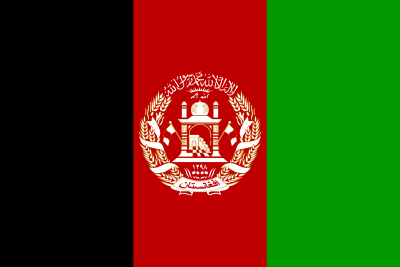
In Sri Lanka, pressure by women’s organizations led to the establishment — within the structure of the formal negotiations — of a ten-member Subcommittee on Gender Issues in 2002. In Northern Ireland, women representatives were trusted as mediators during conflict negotiations, with such trust stemming from the women’s platform of respect for human rights, inclusion and equality. In Haiti, the women’s ministry and women’s organizations participated in a consultative process, resulting in the UN mission incorporating women’s priorities into its mandate and establishing the Disarmament, Demobilization and Reintegration Programme. In Rwanda, women formed the first cross-party parliamentary caucus composed of both Hutus and Tutsis, addressing issues of concern to women from all political parties. In Sierra Leone, a women’s task force was established to foster women’s participation in the design of the Truth and Reconciliation Commission and the special unit investigating war crimes. According to the World Bank, in Afghanistan, efforts by the international community and local women’s organizations have led to girls accounting for 40 percent of all children attending school in 2003, compared to only 9 percent before the war.

While significant and encouraging, such examples and best practices do not equate with the systematic inclusion of women in peace processes. It remains critical to amplify the role and contribution of women during political transitions to capitalize on this window of opportunity.

Sub-topics:

From the Library

Afghanistan: Afghan peace process must be conducted in inclusive manner

Submitted by iKNOW Politics on Wed, 2010-07-21 09:09
Summary: 

Calling upon the international community to reflect on its past experiences in negotiating with fundamentalist and extremist organisations, External Affairs Minister S.M. Krishna said in Kabul on Tuesday that the peace process in Afghanistan must be conducted in an inclusive and transparent manner. The international community must ensure that adequate capacity of the Afghan security forces and other Afghan institutions must be the sine qua non for protecting Afghanistan's sovereignty, plurality and democracy.

Body: 

To read the complete news please visit The Hindu.


Tags:

Afghanistan: Women worry Afghan peace jirga will harm rights

Submitted by iKNOW Politics on Tue, 2010-06-01 08:12
Summary: 

Afghanistan is holding a peace jirga or an assembly of powerful leaders, tribal elders and representatives of civil society to consider plans to open talks with Taliban leaders in an effort to end the nine-year conflict. A possible return of the Taliban has touched off concern about the fate of women who were banned from schools, the work place and public life during the Taliban rule from 1996 to 2001.

"I would not expect the peace jirga to do anything good for women. My hope is that it will recognize their presence and protect their rights equally to men, as presented in the constitution," said Orzala Ashraf Nemat, a leading women's rights activist in Kabul.

Body: 

To read the complete news story please visit Reuters.


Tags:

Rwanda: The most gender-equal parliament in the world

Submitted by iKNOW Politics on Tue, 2010-06-01 08:10
Summary: 

Consisting of more than 50 percent women, Rwanda has the most gender-equal parliament in the world. Yet, this is not mainly a result of some highly successful gender-equality strategies. Instead, the genocide in 1994 led to a shortage of males in the country, and this has opened up for women in politics. This is one conclusion reached in a new doctoral thesis from the University of Gothenburg, Sweden.

Women make up 56 percent of the Rwandan parliament. This means that Rwanda has a higher proportion of women in its parliament than any other country in the world. In 2003, Rwanda caught up with and surpassed previously top-ranked Sweden, and in 2008, the margin had grown even wider. The author of the new thesis, Christopher Kayumba, University of Gothenburg, Sweden, has analysed how women have managed to attain such great success in a country that suffers from poverty, lacks a tradition of gender equality and is still recovering from severe ethnic conflicts and the 1994 genocide.

Body: 

To read the complete news story please visit EurekAlert.


Tags:

Quick Reference Guide to UN Security Council Resolutions

Quick Reference Guide to UN Security Council Resolutions Publication Date: March 2010 Abstract: Despite four separate UNSCRs on women, peace, and security, and the dedicated efforts of international agencies, civil society actors, and governments, courageous women peace builders still face legal, cultural and traditional discrimination. This guide is designed to help advocates efficiently leverage UNSCRs 1325 and 1889 (on women's leadership in peace processes); and 1820 and 1888 (on response to conflict-related sexual violence).

Tags:

African Union: calls to protect the rights of women and children

Submitted by iKNOW Politics on Wed, 2010-05-19 09:52
Summary: 

African Union Peace and Security Council (AUPSC) said incidents of violence against women and children in armed conflicts continued unabated in many parts of Africa.
AU Commission Gender and Development Directorate presented its report at the AUPSC 122nd meeting on Tuesday under the theme Mitigating Vulnerabilities of Women and Children in Armed Conflicts.

The Directorate said it is working towards mobilizing financial support for various programs and projects for women to fight poverty and close the gender gap and thereby halt Africa women’s marginalization.

Body: 

To read the complete news story please visit Ethiopian News.


Tags:

Haiti: Broadcasting Women's Voices in Haiti's Reconstruction - Women's Community Radio

Submitted by iKNOW Politics on Tue, 2010-04-27 11:04
Summary: 

Haitian women have been increasingly vocal and active in social, political, and economic issues since the fall of the Duvalier dictatorship in 1986. Though it has not come easily, their progress in changing gender relations of power within the home, within social movements, and within the nation has been steady.

Women’s organizations have been key to these advances, helping create the space to foster and protect women’s activism. One network is helping women gain voice, literally: the Haitian Women’s Community Radio Network (REFRAKA by its Creole acronym).

The importance of radio cannot be overstated in a country where 45% of men, and 49% of women, are illiterate. Nor can the significance of women taking the microphone, in a country where aggressive patriarchy in the home and society, as well as violence from male partners and the state, have tried to keep them silent.

Body: 

To read the complete news story please visit The WIP.


Tags:

Iran: Parliament studying plan to establish women ministry

Submitted by iKNOW Politics on Mon, 2010-04-26 06:59
Summary: 

A number of Majlis committees are studying a new plan to establish a ministry of women. The plan is going to be discussed at the open session of the Majlis in the near future. The plan falls within a policy to renovate administrative structure of the government, female lawmaker Fatemeh Alia said in an exclusive interview with the Mehr News Agency. If Majlis approves the plan, all organizations on women affairs will be merged, she noted.

Body: 

To read the complete news story Tehran Times.


Tags:

Afghanistan: Dangers Mounting for Afghan Women

Submitted by iKNOW Politics on Wed, 2010-04-21 08:09
Summary: 

Afghan women in public life have always struggled, but the involvement of the international community in Afghanistan over the past eight and a half years opened space for women that did not exist under Taliban rule. Current trends, though, are negative. Women’s participation in politics and public life generally is declining, and, alarmingly, violence against women who venture out of the private sphere is spiking across the country.

On April 14, an 18 year old woman stepped outside the Kandahar office of US-based development firm Development Alternatives International (DAI). A gunmen was waiting for her. With at least nine gunshot wounds, the woman died at the scene. Local authorities blamed the Taliban. The press did not print the victim’s name, presumably out of concern for her family’s safety.

Body: 

To read further the complete news story please visit The UN Dispatch.


Tags:
Advanced Search