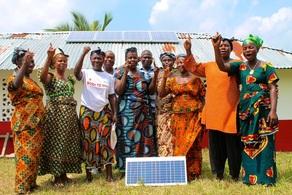
Women’s groups have called for greater participation in politics and decision-making in Nigeria as part of efforts to strengthen inclusive governance.
Advocacy and lobbying are activities that represent and promote the needs of specific groups in political and social arenas. One such group is women, who can collectively pressure their leaders for legislative reforms to protect and promote women’s rights and concerns. It is the goal of advocacy groups and lobbyists to ensure that both the public and politicians understand and support their cause, so that it gains strength and credibility. Securing rights and gains for women requires coalition-building, funding, civic education, awareness-raising and individuals willing to lead the way.
While the goals of advocacy and lobbying are similar, the processes are distinctly different. Advocacy involves gaining and exercising power to influence a political action. Employing methods such as demonstrations, public campaigns and civic education, advocacy can be the primary mission of international agencies and civil society organizations seeking to influence global and national decision makers. Women worldwide frequently organize themselves for advocacy purposes, drawing on their collective power to affect legislation, official policies and governmental programs. Lobbying, however, refers to influencing the government and its leaders. Lobbyists attempt to sway policy makers and legislators to address specific issues, often by introducing or revising legislation and policy. Lobbying activities may include private meetings with decision makers, public campaigns and demonstrations.
Women’s groups have called for greater participation in politics and decision-making in Nigeria as part of efforts to strengthen inclusive governance.
When jiang shengnan, a Chinese lawmaker turned political adviser, was born in 1973, a third daughter to parents in the coastal city of Wenzhou, many urged her mother to keep trying for a son. She refused and gave her daughter the name Shengnan, which means “better than men”.
Today, the European Commission is presenting its new Gender Equality Strategy for 2026 to 2030.
The Deputy Minority Leader, Patricia Appiagyei, has called on young women, particularly students, to actively participate in politics and take up leadership positions.
The Director-General of the Michael Imoudu National Institute for Labour Studies, Issa Aremu, has called for deliberate constitutional and policy reforms that would increase women’s representation in governance, including the creation of special seats for women in Nigeria’s National Assem
The Chairman and CEO of the Nigerians in Diaspora Commission (NiDCOM), Abike Dabiri-Erewa, has urged Nigerian women to actively participate in politics to shape national discourse and contribute meaningfully to the country’s development.
On 16 March, the Delegation of the European Union to China hosted the event “Her Vision, Our Future: Women Pioneering Change” in Beijing, bringing together policymakers, diplomats, academics, civil society representatives and members of the international community to reflect on w
As public trust in politics remains fragile and Australians continue to call for leadership that reflects integrity, capability and lived experience, Pathways to Politics for Women has opened applications for its nationally recognised program.
Sviatlana Tsikhanouskaya is on a visit to Rome, where she joined the “Women of My Time” event,