Parliaments & Representatives

The Scottish Government has “betrayed women and girls” by failing to progress legislation designed to protect them, an opposition MSP has claimed.
Last year, the SNP administration said the protected characteristic of “sex” would be added to the Hate Crime Act.
The pledge came after plans for a standalone law against misogyny was dropped.
Yet moves to update the legislation have stalled with no clear timeline from the government as to when the change will be made.
Ash Regan MSP, who sits as an independent, described the delay as a deliberate political decision rather than a technical oversight.
“Women were told they would be protected, yet sex remains excluded from the Hate Crime Act years later, and after the promise of a stronger, standalone misogyny law was quietly dropped,” Ms Regan said.

Opening a newspaper these days, one cannot miss the year-end reviews on a wide range of issues. Statistics and surveys published across various media outlets in 2025 help us grasp the country’s overall condition. What emerges from these accounts is a troubling picture of continued violations of fundamental rights and citizen security in the post–July uprising period.
This raises serious concerns and casts doubt on how much of the spirit of the uprising has been lost. After all, ordinary people took to the streets in July demanding a “discrimination-free” society, a “new order,” and “justice.” At the end of the day, people seek peace they seek visible improvements in their quality of life. I believe it is necessary to objectively observe and analyse how much of these expectations have actually been fulfilled.
Various studies show that in transitional contexts, people articulate their aspirations in multidimensional ways. While states or international organisations may define “peace” in terms of treaties or ceasefires, ordinary people understand peace as the ability to live their lives—not as an abstract concept.

Nigeria’s renewed push to correct decades of severe gender imbalance in political representation has thrust one proposal to the centre of national debate: the Reserved Seats Bill, a constitutional amendment legislation seeking to create additional elective seats exclusively for women in the Senate, House of Representatives, and State Houses of Assembly.
The idea is simple: To increase women’s representation because, clearly, if deliberate steps are not taken, women will remain excluded from Nigeria’s political system. But the process of implementing this bill, particularly how political parties will nominate candidates and the emerging concerns over cost, campaign size, and electoral fairness, is far more complex.
This explainer unpacks the bill, breaks down how parties may eventually select candidates, examines potential drawbacks, and situates Nigeria’s conversation in a global context.
It also interrogates the argument that women contesting state-wide seats will face gubernatorial-level campaign burdens and what that means for the cost of governance.

Across West Africa, women leaders and legislators are intensifying calls for ECOWAS to enforce laws mandating gender quotas in politics. The demand, freshly echoed at the ECOWAS Female Parliamentarians Association (ECOFEPA) Forum held during the Parliament’s 25th anniversary Extraordinary Session in Abuja, rests on a compelling argument: women make up more than half of the population, yet occupy only a fraction of parliamentary and executive seats across the region.
From Senegal, where women occupy over 40 percent of parliamentary seats due largely to strong quota laws, to Nigeria, where women account for barely 6 percent of legislators, the disparity is both glaring and persistent. The appeal by ECOFEPA president, Veronica Sesay, for member states to legislate reserved seats and proportional representation has revived a long-standing debate on legal fixes for political inequality.

Tajikistan ranked 89th out of 181 countries in the Women, Peace and Security (WPS) Index 2025/26, scoring 0.685, according to the latest global assessment of women’s well-being and rights.
Across Central Asia, Kazakhstan placed 72nd (0.722), followed by Turkmenistan at 74th (0.720), Kyrgyzstan at 84th (0.697), and Uzbekistan at 98th (0.674), The Caspian Post reports via Tajik media.
One of Tajikistan’s strongest indicators is everyday safety: 93 per cent of women said they feel safe walking alone at night in their neighborhood-marked in the index as the best result within the comparison group. However, the country trails in areas related to rights and protection. Access to justice was rated 0.7 on a 0-4 scale, the lowest in the group, while 14 per cent of women reported experiencing intimate partner violence, also the weakest показатель among peers.
Results for inclusion are mixed. Women in Tajikistan complete an average of 10.9 years of education. Employment among women aged 25-64 stands at 28.8 per cent, financial inclusion at 39.4 per cent, and 68 per cent of women use mobile phones. Women hold 26.6 per cent of parliamentary seats.

A quilting metaphor, unique to our nakshi kantha, aptly describes Bangladesh's politics today. The intricate needlework that underpins the beauty of our nightly wrap-on continues to be a revered tradition, often ignoring the actual individuals who recycle worn-out cloths to infuse it with new vitality. The presence/absence of the women weaver's story in this tapestry is telling of our gendered reality. In theory, half the country is female. They lift trophies in football and cricket, they climb mountains, and they outperform their male peers in classrooms, laboratories, clinics, marketplaces, and factories. Yet, when the time comes to claim spaces of real political power, their role starts becoming scarce. The submission of candidatures by 110 women for the forthcoming election is one such example.
Are the preferences of women and men unequally represented in public policies? This simple yet fundamental question has remained largely unexplored in the fast-growing fields of women’s representation and inequality in the opinion-policy link. Our study analyzes gender biases in policy representation using an original dataset covering 43 countries and four decades, with citizens’ preferences regarding more than 4,000 country-year policies linked to information about actual policy change. Our analysis reveals clear and robust evidence that women’s policy preferences are underrepresented compared to those of men. While this skew is fairly modest in terms of congruence, women’s representation is driven mostly by the high correlation of preferences with men. When there is disagreement, policy is more likely to align with men’s preferences. Our analyses further suggest that women’s substantive underrepresentation is mitigated in contexts with high levels of female descriptive representation and labor market participation. In sum, our study shows that gender inequality extends to the important realm of policy representation, but there is also meaningful variation in unequal representation across contexts.
Click here to read the full article published by the Cambridge University Press on 26 October 2023.
Women’s Collective Ireland – Limerick are delighted to launch their new report Addressing Sexism in Politics: Creating Safe, Inclusive and Accessible Political Spaces for Everyday Women, this report is a collaboration between Women’s Collective Ireland – Limerick and TUS research group EDGE.
Since 2019, WCI Limerick has been working specifically to strengthen and increase women’s participation and representation in local politics. In that time, they have worked with over 150 women and were instrumental in the establishment of the Limerick Women’s Caucus, the first of its kind a local level in the country. This work and the feedback they have been receiving from women led them to draft this report.
Click here to read the full report published by the Women's Collective Ireland – Limerick on 17 October 2023.
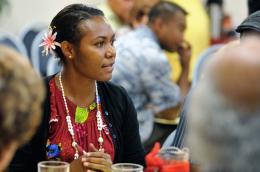
Independent states in the Pacific region have the lowest levels of women’s political representation in the world. Fewer than seven percent of Pacific politicians are women, compared to 27 percent globally. The absence of women’s voices in political decision-making has been an issue consistently raised in regional forums, although progress has been slow. Yet in November 2022, a milestone was reached: for the first time, there was at least one elected woman in every Pacific parliament.
Click here to read the full article published by the Australian Institute of International Affairs on 17 October 2023.
The publication represents the findings of a national survey on the violence against women in politics in Georgia, gathering women’s experiences in politics in Georgia. Namely, it examines the factors that facilitate and obstruct women’s engagement in politics, including the forms of violence against women in politics, women’s experiences with seeking support, and the impact of violence on women’s concentration in politics and leadership.
Click here to read the full article published by the EU Neighbours on 4 October 2023.
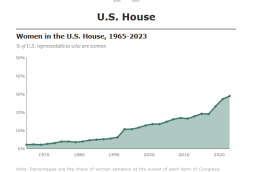
As women’s representation in U.S. politics has grown, 53% of Americans say there are still too few women in high political office in the United States, and many see significant obstacles for women candidates. Our 2023 report on women leaders in politics explores Americans’ views about gender and political leadership, as well as views about the barriers women face.
Click here to read the full article published by the Pew Research Center on 27 September 2023.
Women and girls constitute more than half of Moldova’s population, yet they are under-represented in the bodies that make key decisions affecting their lives. Although Moldova committed to supporting the increase of women’s political participation by adopting in 2016 the 40% gender quota and by the nationalization of SDGs on gender equality, women remain under-represented in political and public leadership. Specifically, 2019 local elections contributed less to 22% women as mayors, 28.73% women district councilors and 36.5% women local councilors.
Click here to read the full report published by UN Women Moldova on 8 September 2023.