Elections

During Nigeria’s election cycles, a particular kind of misinformation circulates alongside the usual false claims about candidates and voting procedures. These are narratives that target women specifically—fabricated scandals, manipulated images, and rumours designed to discredit female politicians and discourage women’s civic participation.
This gendered disinformation operates daily across Nigerian social media and WhatsApp groups, often going unchallenged because the tools to counter it rarely reach the women most affected.
On Friday, Brain Builders Youth Development Initiative launched MyAIFactChecker, a WhatsApp chatbot that allows users to verify information in English, Yoruba, Hausa, and Igbo. What distinguishes this tool from other fact-checking initiatives is not just its technology but its design philosophy: inclusion was treated as foundational rather than optional.
“Technology is only inclusive if inclusion is intentional,” said Sanni Alausa Issa, Communications Director of Brain Builders, at the launch event.

KATHMANDU, Jan 22: Amid the buzz of election fever in the chilly January air, candidates for the House of Representatives (HoR) election on March 5 have been enthusiastically filing their nominations. Yet, a closer look at the numbers tells a striking story: women candidates remain far too few.
Kul Bahadur GC, assistant spokesperson of the Election Commission (EC), says both new and established parties have failed to ensure gender inclusivity in this election. Women’s presence in national politics is still weak, and within parties, female members often lack influence. As a result, women make up only 11.35% of all candidates—a small rise from 9.3% in the 2079 BS election.
Out of 3,486 candidates for the 165 first-past-the-post, or direct, seats, 3,089 are men, 396 women, and 1 from another gender. Experts point to societal patriarchy and male-dominated political culture as key reasons, with men favored in election strategies and campaign resources.

Political parties were failing to reach a consensus on increasing women’s representation in parliament during discussions with the National Consensus Commission. At one stage, a proposal to nominate at least 5 per cent women candidates was tabled, to which most parties agreed.
Despite opposition from women’s rights activists, the July National Charter was finalised with the provision that 5 per cent of nominations would be allocated to women in the 13th Jatiya Sangsad (national parliament) election.
Although Bangladesh Nationalist Party (BNP) agreed to the 5 per cent proposal during discussions with the consensus commission, the party has not adhered to this in this election. Jamaat-e-Islami has not nominated a single woman candidate in any constituency.

Women were at the forefront of the July 2024 uprising, but in the subsequently formed political structures, insecurity and social backlash gradually pushed them aside. Female students from universities across the country, including Dhaka University, were not only leading participants in the uprising, but they also became victims of attacks and lawsuits by law enforcement agencies. However, the number of female candidates in the post-uprising Dhaka University Central Students’ Union (DUCSU) election remained limited, and those who did contest faced extensive cyberbullying.
There were only 62 female candidates in the DUCSU election, accounting for merely 13 percent of the total candidates, even though 48 percent of DUCSU’s voters are female students.
Women’s participation in the Liberation War of 1971 was similarly undervalued in the post-war era. The title Birangana, rather than honouring their contributions, foregrounded the trauma and humiliation they had endured, while obscuring the critical roles they had played on the frontlines. This reflects a long-standing social failure to recognise women’s agency, a problem that persists to this day.

Despite decades of pledges to ensure women’s political empowerment, the upcoming national election paints a starkly different picture, with female representation on the ballot remaining alarmingly low.
More than 30 registered political parties, including Jamaat-e-Islami, have fielded no female candidates, leaving women to make up less than 4.5% of all aspirants in the 13th parliamentary election.
Of the 2,568 nomination papers submitted for the election, only 109 were filed by women—just 4.24 per cent of the total, according to data reviewed by UNB.
The election will see participation from 51 political parties, yet more than 30 of them, including Bangladesh Jamaat-e-Islami, have failed to nominate even a single woman candidate, raising fresh concerns over gender inclusion in national politics.
After scrutiny, the Election Commission (EC) has validated 1,842 candidates, including 1,779 men and only 63 women, meaning women make up just 3.4 percent of the final candidates.
Later, 417 candidates regained their candidacies after appealing to the Election Commission. January 20 was the last day for the withdrawal of candidacies.

A 2025 Democracy International poll shows strong public demand in Bangladesh for greater political inclusion, with 96% supporting participation of persons with disabilities, 85% calling for better ethnic minority representation, and 81% backing stronger involvement of religious minorities.
The findings were unveiled at a roundtable titled "Priorities of All People in Politics and Government", jointly organised by Democracy International and The Business Standard at its Dhaka office, moderated by TBS associate editor Saleem Ahmed.
Catherine Cecil, Democracy International's Bangladesh chief of party, said inclusion is no longer optional but "a democratic necessity."
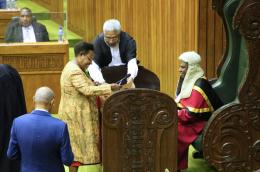
Independent states in the Pacific region have the lowest levels of women’s political representation in the world. Fewer than 7% of Pacific politicians are women, compared with 27% globally. The absence of women’s voices in political decision-making has been consistently raised in regional forums, although progress has been slow. Yet, in November 2022, a milestone was reached: for the first time, there was at least one elected woman in every Pacific parliament.
Click here to read the full article published by the Australian Strategic Policy Institute on 17 October 2023.
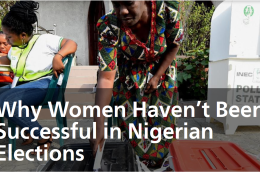
Women’s representation in political offices continued to decline in the 2023 elections. Four main factors help explain why Africa’s largest economy is such a difficult space for women candidates.
Women’s representation in Nigerian politics has been on a downward slide since 2011, and the 2023 elections in Africa’s largest economy confirmed the expectations of poor outcomes for women. The number of women in Nigeria’s National Assembly has fallen by 19 percent compared to the last assembly, with women now occupying 3 percent of seats in the Senate and 4 percent in the House of Representatives.
To understand why Nigerian women performed so poorly in the recent elections, the 2022 primary elections provided insight into the challenges and barriers faced by women aspirants and candidates. The results of the various parties’ primary elections highlight enduring limitations to women’s representation in competitive politics in Nigeria. The country ranks in the bottom ten globally in women’s representation in national parliaments, according to the Inter-Parliamentary Union (IPU). This challenge of representation persists in spite of the near parity of voter registration between men and women in past election cycles.
Click here to read the full article published by Carnegie Endowment For Peace on 09 May 2023.
Online abuse has a profound impact on the health of democratic societies, threatening progress on diversity and representation in politics. Research has shown that abuse can deter women and individuals from minority groups from pursuing careers in politics, and drive those already engaged to step down from political life. The 2022 midterm elections in the US saw a growing number of candidates from minority backgrounds running for office. Faced with growing public pressure, social media companies took steps to amend their policies and community standards to address illegal and harmful content and behavior on their platforms. Evidence has shown, however, that abusive image and video-based content can fall through the cracks of content moderation, pointing to a lack of adequate response from social media platforms. In the run-up to the November 2022 midterm elections, ISD investigated abusive content on Instagram and TikTok targeting prominent women in US politics. Researchers analyzed hashtag recommendations served to users on both platforms when searching for content related to several key women in US politics in the days before the election. This report finds that platforms recommend abusive hashtags when people search for the names of these female political figures, and also promote abusive content that violate their own terms of service, showing that harmful and abusive content targeting women running for, and in-, office remains in plain sight of the platforms.
Click here to access the report.

Diagnosing women’s under-representation in electoral politics often involves a “blame game,” seeking to identify the primary factor responsible for depressing the share of women among candidates as well as elected officials. The Danish electoral system – in which parties present ordered lists of candidates but voters have the option to cast preference votes that can rearrange the list order – provides an opportunity to assess the relative role of elite versus voter bias in shaping women’s electoral fortunes. Using data from local elections in 2009, we find greater evidence for elite bias against women. We also observe, however, that voters do not widely exploit their preference votes. In an original post-election survey, we discover that “candidate gender” is less important for male and female voters than a host of other characteristics when deciding for which candidate to cast a preference vote.
Click here to access the article.
From a gender perspective, three main lessons can be learnt from the general election. First, gender issues are on the rise, a fact shown not least by the appointment of the first-ever women running mate for one of the two main presidential candidates. Second, although the ratios of women representatives at all levels are slowly but steadily increasing, the gender quota is just window dressing, which the parties blatantly ignore or work around by nominating women candidates to top-up lists. Third, violence against women in politics poses a serious threat to women’s political inclusion and citizenship.
On 9 August, Kenyans headed to the polls to elect the country’s president. In addition to the executive, Kenyans also elected 290 members of parliament, 47 governors, 47 senators, 47 women representatives and 1,450 members of county assemblies in the elections. However, the executive race was the focus of attention. Both online and offline, the two presidential contenders William Ruto and Raila Odinga engaged in rhetoric to disparage the other, a tactic that succeeded because of – and was perpetuated by – the spread of misinformation.
Click here to access the report.

A nascent body of literature has highlighter the violence (broadly defined) that women sometimes face as they enter politics. Some interpretations depict this violence as primarily gender motivated: women politicians are targeted because they are women. Another interpretation is that violence in some contexts is an everyday political practice targeting men and women alike. However, because we lack large-scale, systematic comparisons of men’s and women’s exposure to election violence, we know little about the extent to which – and how – candidate sex shape this form of violence- We address candidates in the 2018 Sri Lanka local elections. Sri Lanka is a suitable case for analysis because it is a postconflict country in which political violence has been endemic and the number of women candidates has increased rapidly due to gender quota adoption. Overall, we find large similarities in men’s and women’s exposure to violence, suggesting that violence sometimes is part of a larger political practice. However, we find that women are exposed to forms of intimidation of sexual nature more often than men. This finding demonstrated the need for gender-sensitive analyses of election violence.
Click here to access the article.